3D scans overview
The 3D scans are somewhat usable, some of them are not. They are relatively clean and mostly don’t require any artistic work. They can’t be algorithmically adapted and exported to the game as every model needs a somewhat different procedure as it comes with arbitrary transforms.
Separating the model from the environment is the most labor intensive task but it’s still relatively quick, in total a single model shouldn’t take more than 45 minutes to be fully adapted and exported to the game.
Some hard limitations can be observed in the scans if a tree is very close to a building and is “glued” to it, it needs manual artistic work to remove the tree and build an approximation of the wall behind it. This is fine but it’s noticeable if the walls have certain features hidden behind the trees.
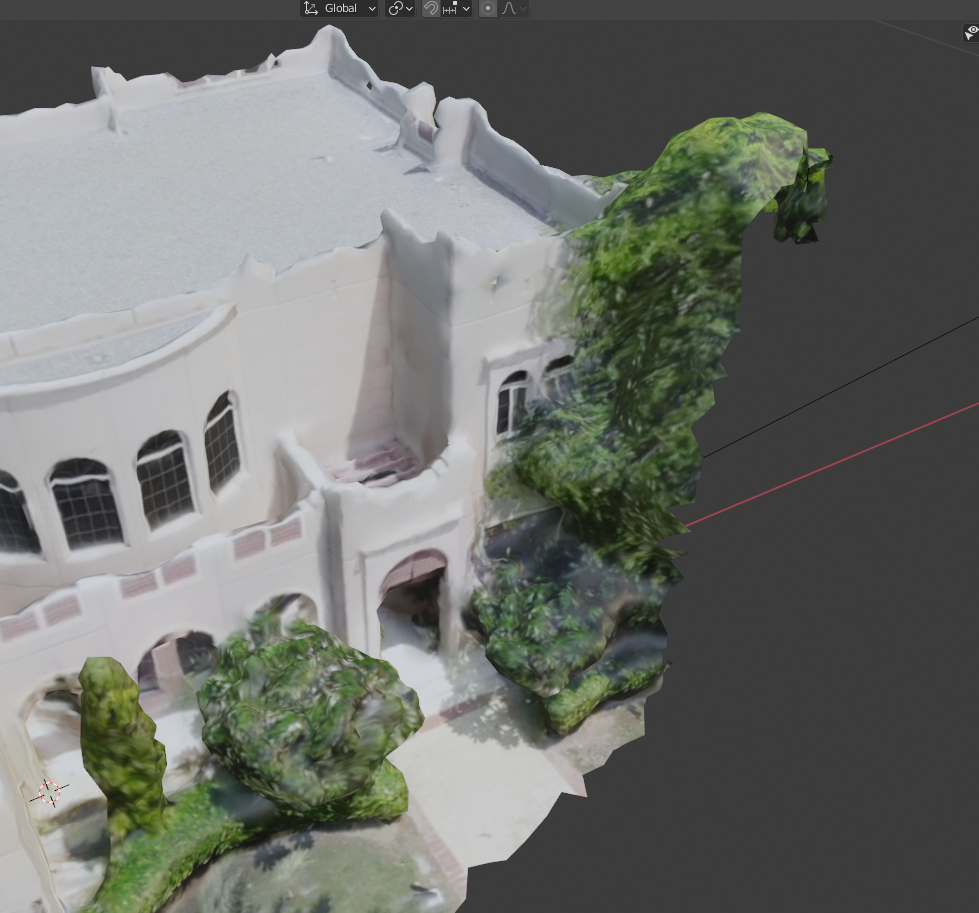
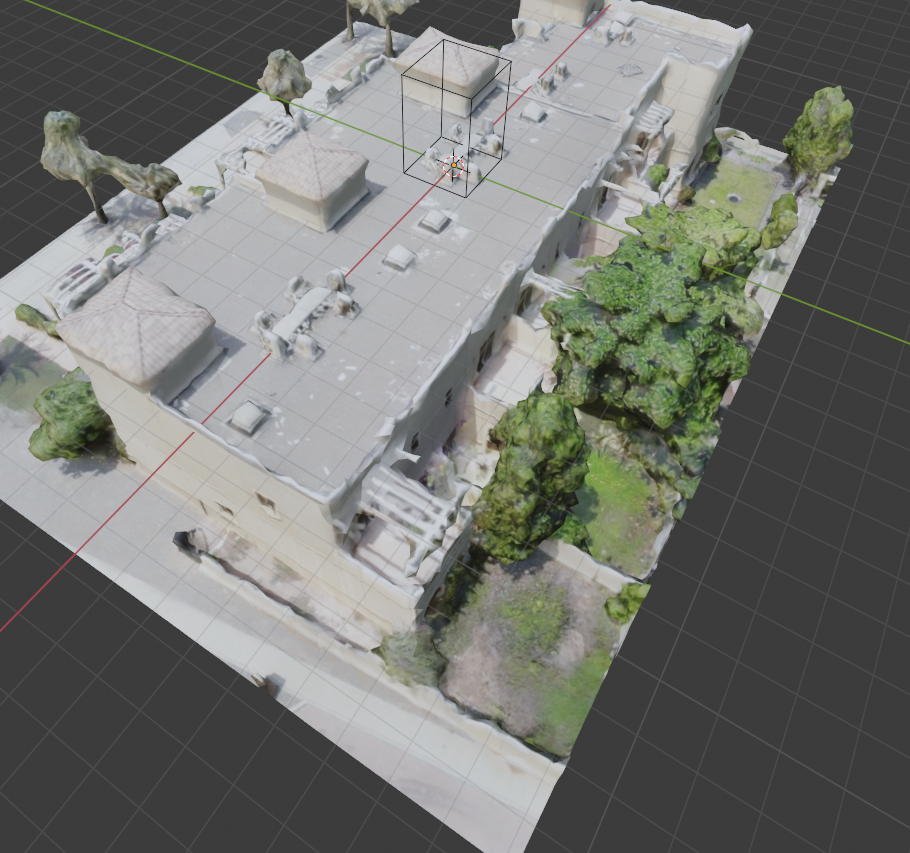
Garden.fbx
After a bit of cleanup it looks like this
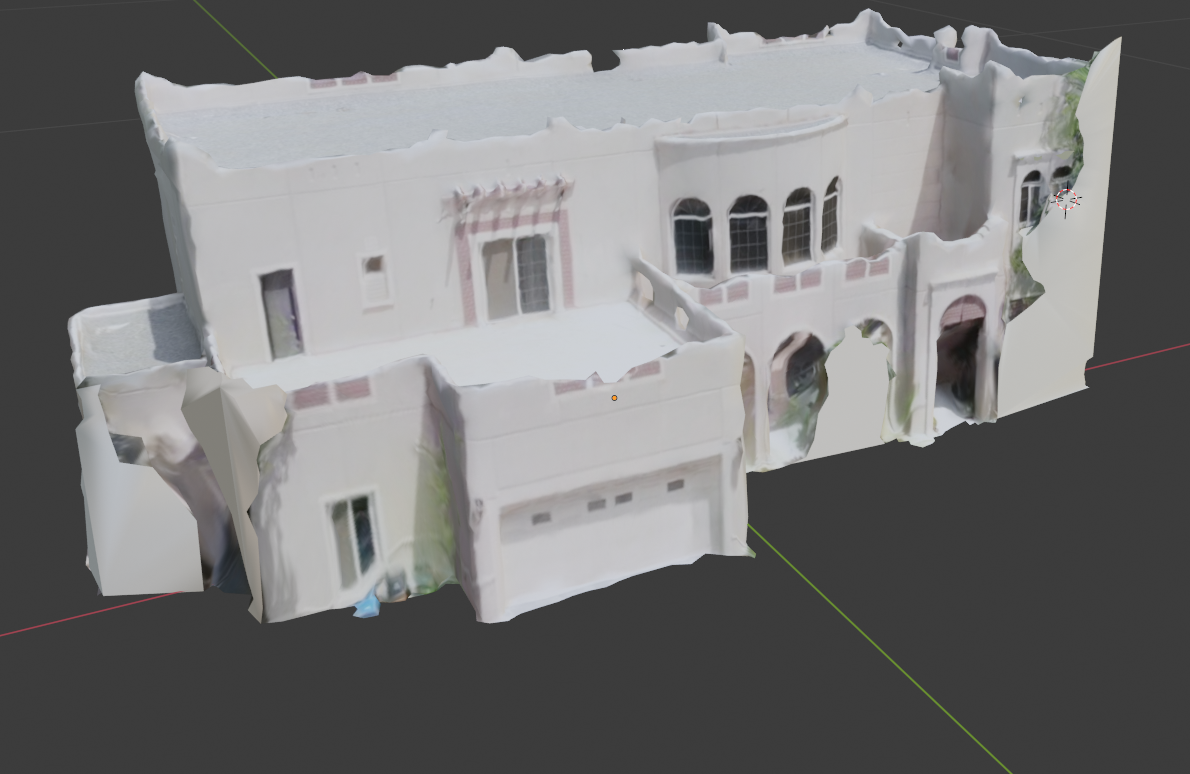
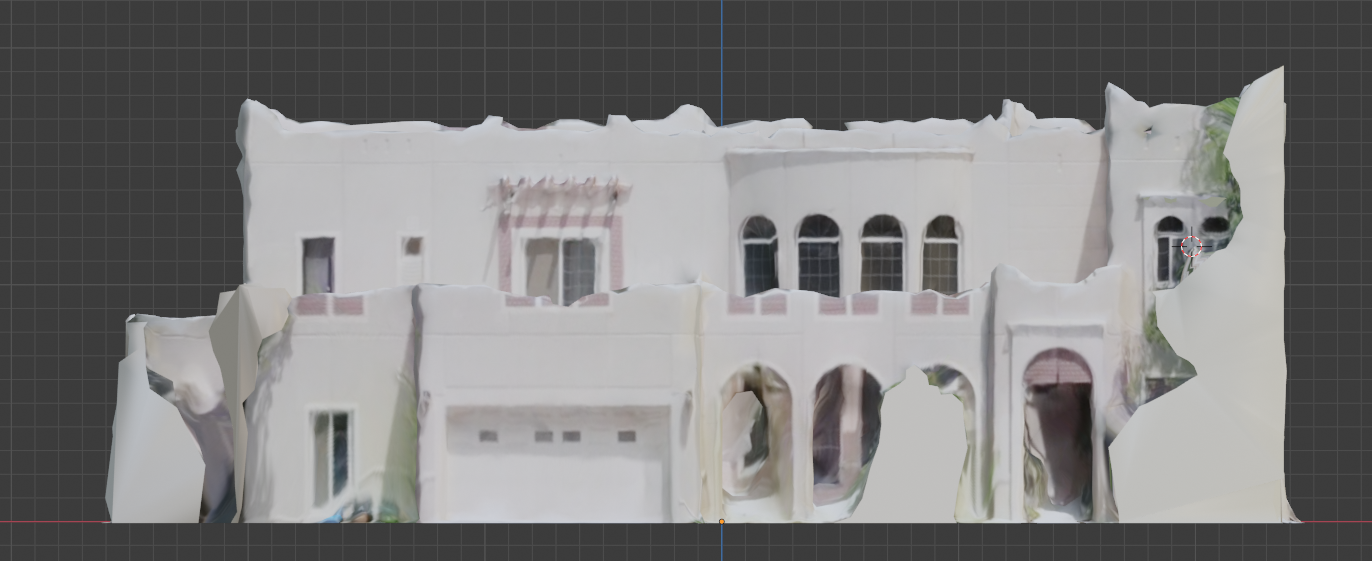
Not really the cleanest looking, but considering that so many parts were covered by large trees it will look decent enough from a distance, especially when ingame trees are added to cover up the messed up parts to match the real environment.
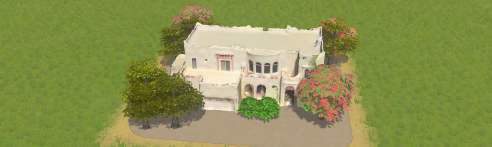
What it looks like inside the game after adding trees as props:
Luckily, some of the buildings were symmetrical, so I could choose the “cleaner” side and mirror it onto the other, this of course makes cleanup way easier and makes otherwise impossible to clean areas as good as the other side of it is. Example of a symmetrical building, before and after cleanup:
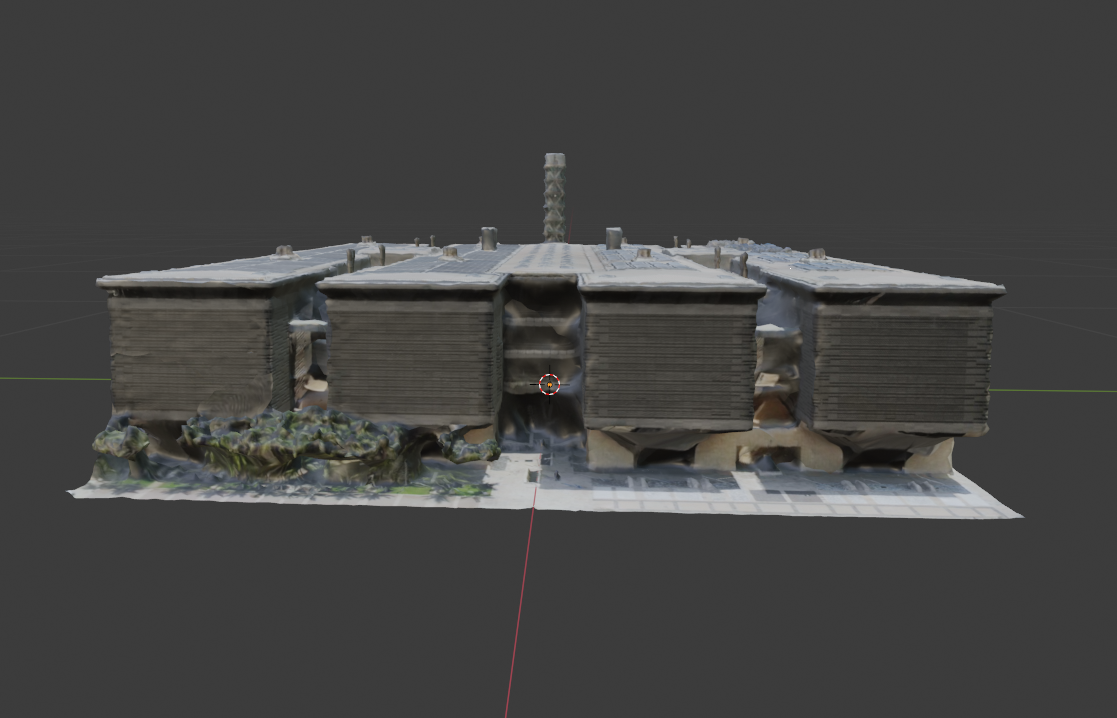
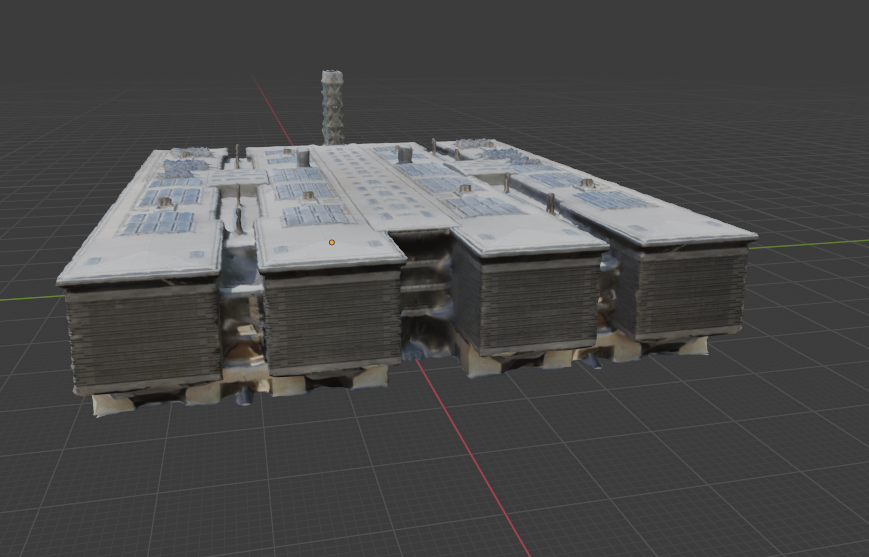
Another example of symmetric buildings before and after cleanup:
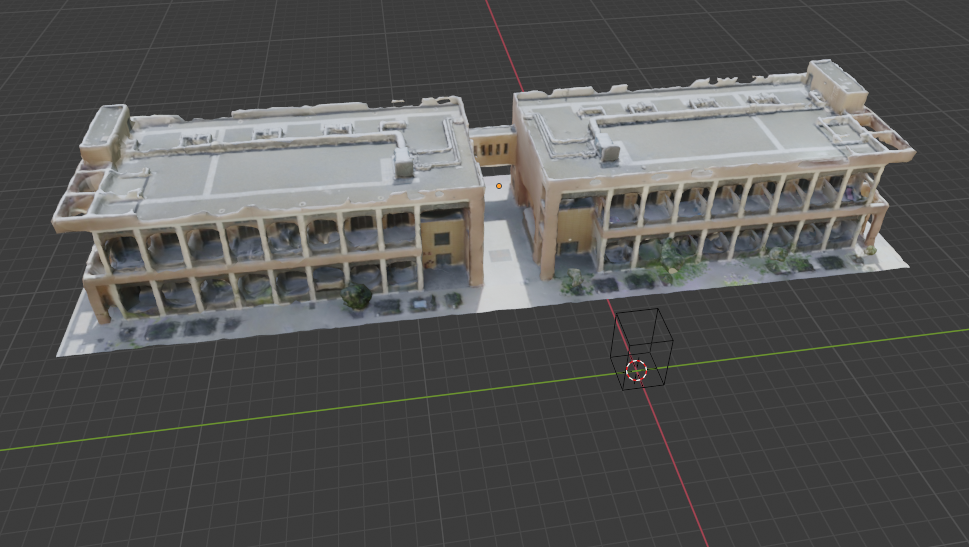
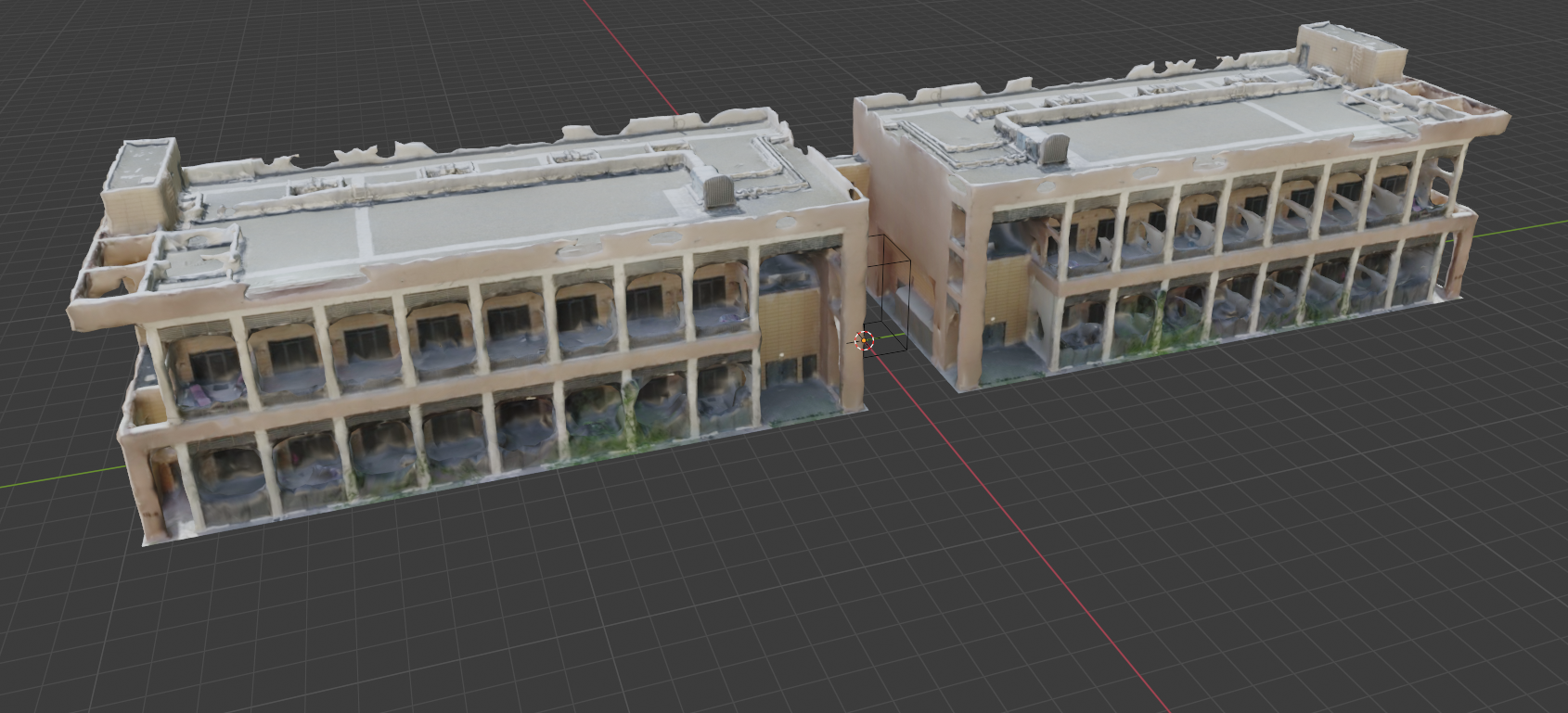
3D scans definitely make asset creation easier but they have a fair share of cons as they have pros, so to recap the observed pros and cons;
Pros:
-
Mostly little artistic work to be done
-
Fulfills the purpose of doing identifyable representations in game that look good from a distance.
-
Very realistic high resolution texture maps and UVs auto generated that fit the game’s requirements.
Cons:
-
Vegetation greatly affects the quality of the buildings, as trees can act as huge obstructions to the scanning process.
-
Tolerances aren’t the best, the buildings can be noticable skewed if observed on perfect grids.
-
Tedious cleanup process, cannot be automated even considering learning based algorithms.
-
Lighting is static, meaning the scans will contain lighting data from real life like sun lighting and shadow direction, not really ideal as the game has its own lighting.
-
Lacks information about windows, which the game uses to make buildings light up in nighttime.
-
Recreating the buildings as perfect CAD models to overcome the said limitations is a very labor intensive process that has to be done by game artists (architects have to know about game art to know the game’s limitation, architecture models can’t be just exported into the game).
-
Models have a hard limit of 65K vertices, this limit can be overcome by decimating the models or splitting them into parts. Placing the parts into the game is a tedious process but workflow improvements are being discussed to improve this.
Note: some models were duplicates of others, so I picked the cleanest of them all and cleaned it up.